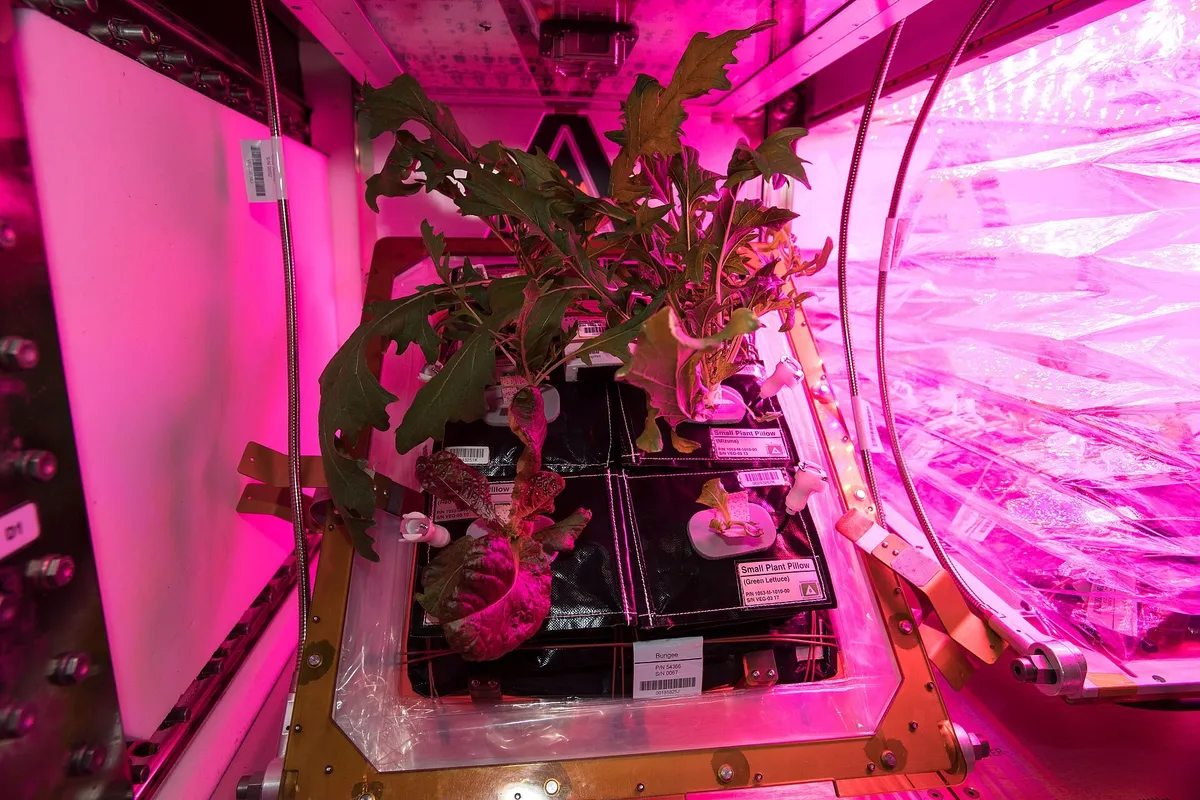
A first-of-its-kind system for growing crops is headed to the International Space Station, along with an experiment designed to keep small lab-grown models of human brain tissue alive in orbit.
Both ride on Northrop Grumman's 25th Commercial Resupply Services mission for NASA, the agency said in its mission announcement.
For science teachers, the cargo ties research in orbit to two topics students can explore on the ground: growing food indoors and modeling brain disease.
"Astronauts will need sustainable sources of food to travel farther and stay longer in space," NASA said.
Ohalo III will house the crops. Inside it, a novel experiment will study how crop production works in microgravity.
Aboard the station, researchers will check two parts of the prototype chamber's design, how it delivers water and how it makes the most of its volume.
NASA said the chamber "will provide critical insights for developing safe, nutritious, and reliable crop production systems for future Moon Base habitats and Mars missions."
Farms on Earth could gain too. Vertical farms and other indoor growers could draw on the same lessons, the agency said.
Brain tissue is the other focus. NASA calls that work a precision health investigation, the next step toward studying human brain tissue in space over long stretches.
It builds on an earlier flight that carried miBrains, small brain models grown in a lab, to the station.
This time, researchers will test a miniature fluid-handling system that's built to mix, supply and look after the nutrient-rich liquid the tissues need to stay alive.
Findings could "help identify potential neurological risks associated with spaceflight and develop strategies to protect astronaut health," NASA said. Labs on Earth could benefit as well, since the work may push forward research on human tissue and the modeling of neurological disease.
Both experiments come from NASA's Biological and Physical Sciences Division. It runs studies in space that can't be done on Earth.
More articles
Middle Schoolers from Tel Aviv and Ohio Square Off in CodeMonkey Global Coding Finals
CodeMonkey is proud to announce the successful conclusion of its international middle-school coding competition, culminating in a high-stakes global final between students from Tel...

The Rising Trend of Self-Discovery and Personal Growth: Why We’re All Looking Inward
Take a look around. From packed yoga classes to meditation podcasts topping the charts, it’s clear: people are searching for something deeper. We’re living...
How AI and gamification revolutionize early childhood education
Artificial intelligence (AI) is transforming early childhood education, offering personalized learning experiences that adapt to each child’s unique needs. Through the work at RMB...